






The workplace in 2030 for MSPs: why waiting costs you clients
 AuthorMSP Late NightPublished on:
The workplace in 2030 is discussed by most MSPs as though it can wait a few more years. Meanwhile the AI colleague is already in your client pocket, developers are using open routers to pick from any LLM, and quadrupling their productivity with it. If you as an employer do not arrange that access, you are cutting your own fingers. And that is not 2030. That is now. The question is not whether you come along, but whether you are the first to dare to start the conversation with your client, or the one who gets to sweep up the pieces afterwards.
The pattern is familiar. A client calls: “we want Copilot.” Box ticked, licence sold, invoice out the door. Three months later nothing has changed. The data is still scattered across thirteen SharePoint sites, the permissions were never cleaned up, and users open Copilot exactly once a week to ask something they could have put to a search engine.
Meanwhile you know as an MSP owner that this is not sustainable. Margins on licences are falling. Everyone does Copilot. Every competitor on the corner sells the same little bundle. And the client, whether it is a shoe factory or a hotel chain, is busy with their own operation and increasingly expects you to come along with the renewal. Not with a product demo. With a business conversation. And that is exactly the conversation the average account management team is not yet ready for.
What you often see: the account team talks about tickets, uptime and renewal. Never about where the client will be in three years. While the client is already hearing from their neighbour on the golf course that an AI agent does the invoicing. That gap, between what you sell and what the client expects, grows wider by the month. And at some point it is too wide to bridge with a quarterly review.
What the workplace in 2030 asks of an MSP
What works in practice is not selling yet another AI product line. What works is reversing the order. Stability first, then data, then workflows, then agents. A client whose foundation is not in order is not going to get business value out of AI. Full stop. That means that as an MSP you move the conversation from “which licence” to “which risk do we lower first so that this is worth something to you later”.
The role therefore shifts from IT administrator to someone who brings in business value. In concrete terms: building integrations between platforms, opening up data towards the workplace, and before long managing the AI agents that take over part of your client work. That is a different sales conversation. You no longer come in to sell IT, you come in to discuss growth, EBITDA, productivity and risk reduction. The price tag is a consequence, not a starting point.
Why the conversation with the client changes
Take an owner of a mid-sized business who has built something good, in hospitality or retail for example. They are stuck in their daily operation and think: if you do what you did, you get what you got. New applications, agent frameworks, data integrations, those do not land on their desk by themselves. If you as an MSP do not come in every quarter with a concrete proposal, someone else will. Or worse: nobody does and the client grinds to a halt without you noticing until the cancellation lands in your inbox.
“The question is not how the workplace changes, but whether you change with it”
The use case is the test, not the product
There is endless talk about AI and too little about which problem it solves. That is the test. For a sales manager who hates admin, an agent that updates their CRM is immediate value. For a team of lawyers reading contracts, retrieval over their own documents is immediate value. For a client who wants management costs down, AI means part of the first line disappears, and you have to dare to have that conversation. Even when it touches your own SLA model. If you wait until it goes wrong, you are too late.
“Creativity is where we can set ourselves apart from AI”
From reactive ticket work to proactive orchestration
The MSPs already having this conversation have one thing in common: they have redesigned their own company. No longer one account manager on fifty clients putting out fires, but a small team that keeps a roadmap per client. What is running, what is the next step, which department is in the most pain, which process is crying out for automation. That calls for investment in people who can hold the conversation at board level. And it asks the owner to accept that the classic helpdesk margin is under pressure and that the new margin comes from advice, integration and adoption.
Adoption is the real revenue model, not the licence
On the bare licence you will earn even less in 2030 than you do now. What you earn on is everything around it: cleaning up data before Copilot is let loose on it, setting up permissions, managing agents, building integrations between platforms and the workplace. And, perhaps most importantly, training users. We are a long way behind on education, inside our own companies as well. The MSP that does not school its own team cannot school its clients either, and loses the role of leader in the conversation. Human connection is the new luxury. Knowledge sessions at the office, colleagues taking each other by the hand, that is not soft stuff. That is exactly where your distinctiveness comes from in a market where everyone sells the same tools.
Work it out. A client with a hundred users and a Copilot licence earns you a margin on the licence that barely pays for an account manager. That same client with a twelve-month adoption programme, in which you clean up data, build three integrations, deliver two agents and train the staff, earns a multiple. And, just as important: that client does not leave. Because you are no longer in the IT corner, you are in the boardroom. That is the difference between an MSP that still exists in 2030 and an MSP that by then only picks up the leftovers from clients the big players have passed over.
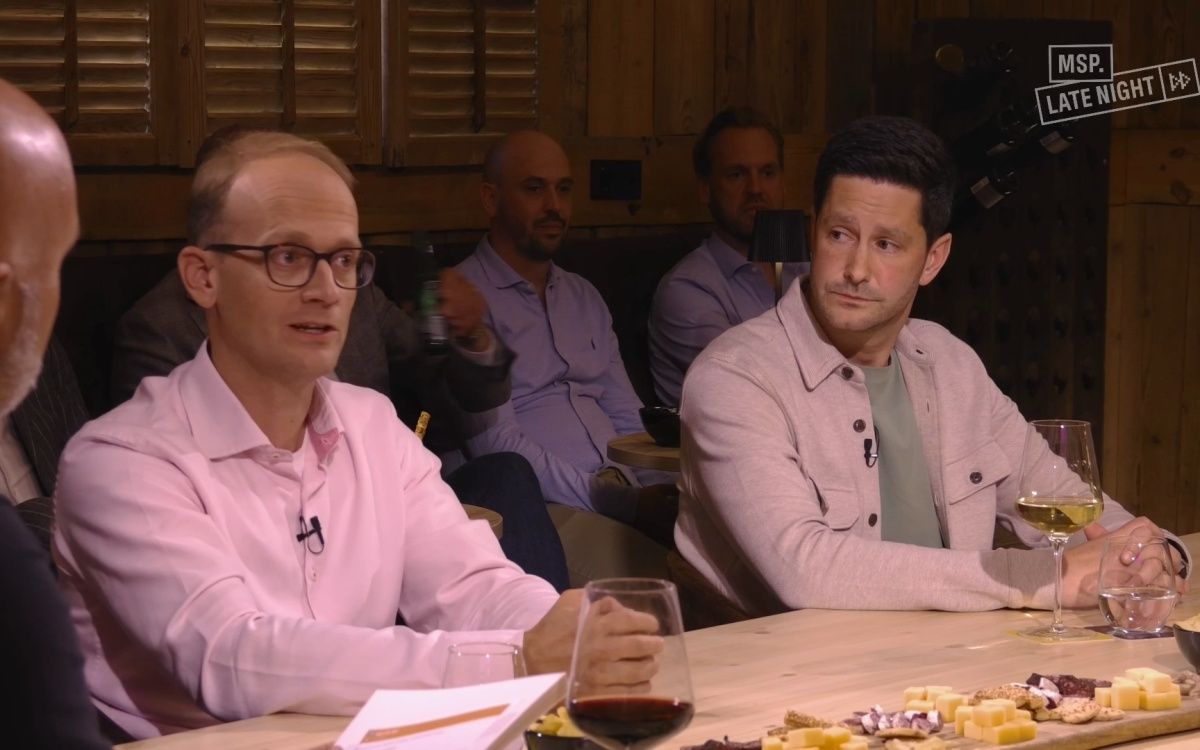
The workplace in 2030 will not be won by whoever offers an AI agent first. It will be won by whoever gets the foundation in order, moves the conversation towards business value and takes their own people along in time. Anyone still waiting for the client to ask will in three years be the party who only gets to fix the faults others left behind. At MSP Late Night, the owners who do have this conversation sit around the table together.